
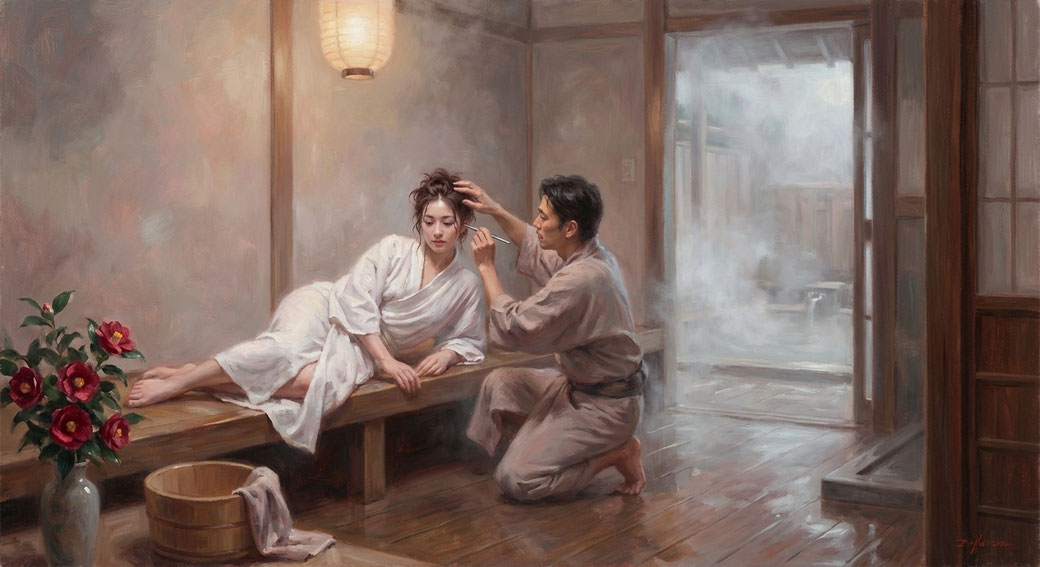
Treat Your Sweetheart to Some Japanese Mimikaki This Valentine's Day
Valentine's Day is upon us. And while your other half might be hoping for roses, chocolate, or at the very least a card, we at The Hearing Lab Store thought we'd suggest something a little more... intimate. Something that says, "I trust you enough to let you put a tiny bamboo scoop in my ear." We're talking about mimikaki - the ancient Japanese art of ear cleaning.
Before you raise an eyebrow or a stick from the garden, hear us out. Mimikaki has a thousand-year pedigree, a genuine scientific basis, and - in Japan at least - it's considered one of the most loving things you can do for another person. So grab a glass of fizz, the Milk Tray and settle in, because this is ear care with heart.
Key Takeaways
| Topic | Key Point |
|---|---|
| What is Mimikaki? | A traditional Japanese ear-cleaning tool with over 1,000 years of history, used to gently scoop dry earwax from the outer ear canal |
| Cultural Significance | In Japan, cleaning a loved one's ears is an act of intimacy and trust - mothers clean children's ears as a bonding ritual, and couples do it for each other |
| The Science | A variant in the ABCC11 gene means 80-95% of East Asians produce dry, flaky earwax - which cotton buds cannot remove but a mimikaki can scoop out |
| Modern Ear Care | Professional microsuction remains the safest clinical method for impacted or wet cerumen - mimikaki is a cultural companion, not a clinical replacement |
| Valentine's Takeaway | Whether you opt for chocolate, flowers, or a bamboo ear scoop, ear care is always a labour of love |
What Is Mimikaki?
"Mimikaki" (耳かき) translates literally as "ear scratching" or "ear scooping". It's a slender tool - typically around 15 to 20 centimetres long with a small spoon-shaped or looped tip at one end. Traditional versions are made from bamboo, though modern variants use stainless steel, titanium, or plastic. Some even feature LED lights for illumination. The Japanese brand Nonoji has sold over 3.5 million of its metal mimikaki in the last decade alone.
The practice dates back well over a thousand years in Japan and across East Asia. You can find mimikaki in every Japanese convenience store, pharmacy, and department store. They come in everything from basic bamboo sticks with cotton puffs to high-end titanium instruments with ergonomic grips. Some even feature Hello Kitty figurines because apparently nothing says "ear hygiene" quite like a cartoon cat.
But mimikaki is about far more than just a tool. In Japan, the act of cleaning another person's ears is considered deeply personal. Mothers routinely clean their children's ears as part of daily care, with the child resting their head in their mother's lap. It's a bonding ritual that many Japanese people recall fondly well into adulthood. Couples also perform mimikaki for each other - the vulnerability of allowing someone access to your ear canal is, in Japanese culture, a powerful expression of trust and affection.
This cultural significance has spawned an entire industry. Hundreds of ear-cleaning parlours operate across Tokyo and other major Japanese cities. Customers pay around ¥8,400 (roughly £45) for a 70-minute session that includes tea, conversation, ear massage, and meticulous cleaning by a kimono-clad attendant. Some establishments even offer "ear fortune telling," where the practitioner reads your ear's unique characteristics to divine your personality. We're not suggesting you add that to your clinic's service menu - but stranger things have happened.
The Science Behind Mimikaki: Why Earwax Isn't One-Size-Fits-All
Here's where it gets genuinely interesting for those of us in the audiology world. The reason mimikaki works so well for Japanese and other East Asian populations isn't just cultural preference - it's genetics.
In 2006, researchers at Nagasaki University identified that a single nucleotide polymorphism (SNP) in the ABCC11 gene on chromosome 16 determines whether a person produces wet or dry earwax. The variant, 538G→A (rs17822931), is the first known example of a visible human trait controlled by a single DNA change.
People with the GG or GA genotype produce wet, sticky, honey-coloured cerumen - the kind most of us in the UK are familiar with. People with the AA genotype produce dry, flaky, greyish earwax. And the distribution is striking: 80-95% of people with East Asian ancestry carry the dry earwax variant, compared with just 0-3% of those with European or African heritage.
This matters because the two types of cerumen behave very differently in the ear canal. Wet earwax adheres well to cotton buds and tends to migrate outward naturally. Dry earwax, however, is flaky and crumbly - it doesn't stick to cotton swabs, and can easily become impacted if not physically removed. A scoop or loop makes far more sense for dry cerumen than a swab. That's the practical foundation of mimikaki.
For professionals performing microsuction and instrumented ear care, this is worth noting. If you see patients of East Asian descent, their cerumen profile may be quite different from the majority of your caseload. A dry, flaky presentation is normal for them - not a pathology. Understanding the genetics behind cerumen type can inform your clinical approach and improve patient communication.
As an aside, the same ABCC11 gene variant also determines body odour intensity. Those with the dry earwax genotype tend to have significantly less underarm odour. So if you ever needed a polite conversation opener about cerumen genetics at a dinner party, that's your angle!
What We Can Learn from Japan's Ear Care Culture
Humour aside, there's something worth reflecting on in Japan's approach to ear health. In a country where ear-cleaning is a mainstream cultural practice, awareness of ear hygiene is vastly higher than in the UK. Japanese people grow up understanding that their ears need regular attention. They don't wait until they can't hear properly before seeking help.
Compare that with the UK, where many people arrive at our clinics with years of accumulated wax, having never considered ear maintenance until a problem forced their hand. There's an argument that we could all benefit from a little of Japan's proactive attitude. Not necessarily the bamboo scoops - but the principle that ear care is routine, not reactive.
For professionals, this translates into a practical opportunity. Educating patients about preventative ear care - regular check-ups, proper use of softening drops, and knowing when to seek professional removal - is good practice and good business. Patients who understand their ears come back regularly, refer others, and rarely present with the kind of impacted cement-like wax that makes everyone's day a little harder.
Show Your Ears Some Love
Whether you're celebrating Valentine's Day with a partner, or just your faithful otoscope, the message is the same: ears deserve attention, care, and the occasional grand gesture.
At The Hearing Lab Store, we supply everything you need to deliver first-class ear care to your patients - from suction units and video otoscopes to consumables, ear drops, and training. Both of our founders are audiologists who understand exactly what clinicians need, because we use the same equipment every day.
This Valentine's Day, show your clinic some love. Browse our full range at The Hearing Lab Store or call us on 0151 662 0292 to discuss your equipment needs. We're always happy to talk ears - even on Valentine's Day.
Frequently Asked Questions About Mimikaki and Ear Care
What exactly is a mimikaki and how is it used?
A mimikaki is a traditional Japanese ear-cleaning instrument, typically 15-20 cm long with a small curved scoop or loop at one end. The tool is gently inserted into the outer portion of the ear canal and used with a light scooping motion to remove visible earwax. Traditional versions are crafted from bamboo with a cotton puff at the opposite end for brushing away debris. Modern variants are available in stainless steel, titanium, and plastic, with some featuring LED illumination. The tool is designed for the outer ear canal only and should never be inserted deeply. In Japan, it is common for family members or partners to perform mimikaki for each other as an act of care and intimacy.
Why do Japanese people produce different earwax from Europeans?
The difference is genetic. A single nucleotide polymorphism in the ABCC11 gene on chromosome 16 determines whether a person produces wet or dry earwax. People with the AA genotype produce dry, flaky, greyish cerumen, while those with the GG or GA genotype produce the wet, sticky, honey-coloured wax familiar to most Europeans. Research published in Nature Genetics in 2006 showed that 80-95% of East Asian populations carry the dry earwax variant, compared with just 0-3% of European populations. This genetic variation is thought to have arisen as an adaptation to colder climates in northeastern Asia and has been traced back approximately 40,000 years.
Is mimikaki safe to use at home?
When used correctly, mimikaki can be used for gentle maintenance of the outer ear canal. However, medical professionals consistently advise caution when inserting any instrument into the ear. The risks include tympanic membrane perforation, abrasion of the canal skin, and pushing wax deeper if technique is poor. The tool should only be used in the visible outer portion of the canal with very light pressure. For impacted or problematic earwax, professional removal via microsuction or irrigation is always the safer option. If you are a healthcare professional looking to offer clinical ear care, The Hearing Lab Store provides accredited microsuction training and full equipment packages.
Can I offer mimikaki-style services in my UK audiology clinic?
While mimikaki itself is an unregulated personal care tool, any ear-cleaning service offered in a clinical setting in the UK should follow professional guidelines and best practice. Microsuction and instrumented ear care remain the recommended clinical methods for cerumen removal, as they offer direct visualisation, controlled suction, and a strong evidence base. That said, understanding mimikaki and the cultural context of ear care in different populations can help you provide more informed and sensitive care to patients of diverse backgrounds. If you are looking to expand your ear care services, our microsuction training courses are an excellent starting point.
Should I adjust my approach for patients with dry earwax?
Yes. Dry cerumen behaves differently from wet cerumen during removal. It can be more brittle and may fragment during suction, potentially making the procedure slightly more time-consuming. Pre-treatment with a suitable ear drop or spray can help soften dry wax before a microsuction appointment. It is also worth explaining to patients with dry earwax that their cerumen type is genetically determined and entirely normal. Understanding the patient's cerumen profile - informed by their ethnic background and the ABCC11 gene variant - can help you tailor both your technique and your patient communication.
References
Yoshiura, K., Kinoshita, A., Ishida, T., et al. (2006). A SNP in the ABCC11 gene is the determinant of human earwax type. Nature Genetics, 38(3), 324-330.
Ohashi, J., Naka, I., & Tsuchiya, N. (2011). The impact of natural selection on an ABCC11 SNP determining earwax type. Molecular Biology and Evolution, 28(1), 849-857.
Sato, T., Amano, T., Ono, H., et al. (2009). Allele frequencies of the ABCC11 gene for earwax phenotypes among ancient populations of Hokkaido, Japan. Journal of Human Genetics, 54, 409-413.
Krieger, D. (2011). Tokyo trend: Ear-cleaning parlors. CNN Travel. Retrieved from cnn.com.
Guest, J.F., Greener, M.J., Robinson, A.C., & Smith, A.F. (2004). Impacted cerumen: composition, production, epidemiology and management. QJM: An International Journal of Medicine, 97(8), 477-488.

